
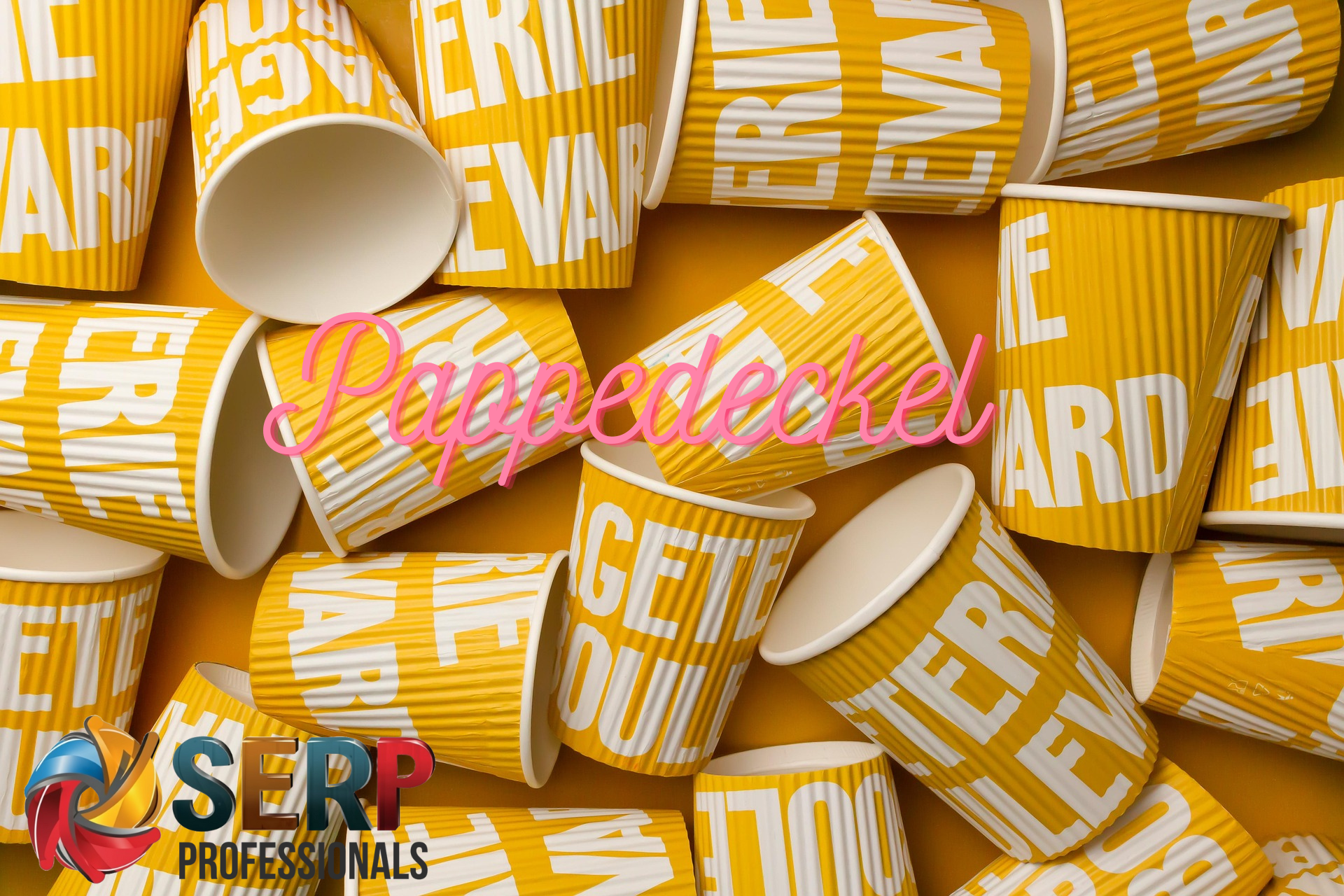
In a world increasingly centred on sustainability, savvy packaging “Pappedeckel”, and eco-friendly materials, conventional arrangements are gaining renewed attention. One such material is Pappedeckel—a durable cardboard shape that has been utilised for decades by businesses. Whereas it may seem straightforward to begin with, Pappedeckel plays a vital part in bundling, fabricating, making, and natural assurance.
This article explores Pappedeckel in depth, covering its history, reason, composition, and the numerous focal points that make it an important fabric indeed in today’s high-tech world.
What Is Pappedeckel?
Pappedeckel is a German term that broadly refers to thick cardboard or paperboard, ordinarily made from compressed layers of paper strands. Compared to customary paper or lean carton, Pappedeckel is more grounded, denser, and more inflexible, making it appropriate for auxiliary and defensive employments.
It is commonly used for:
- Packaging and boxes
- Book covers and folders
- Product backing and inserts
- Craft and DIY projects
- Industrial and commercial applications
Since it is paper-based, Pappedeckel is moreover recyclable and biodegradable, aligning well with present-day sustainability objectives.
The History of Pappedeckel
The beginnings of Pappedeckel are closely tied to the history of paper generation in Europe. As early as the 18th and 19th centuries, producers started testing with layered paper materials to make more grounded choices than wood and calfskin.
Early Development
- Paper plants compressed reused paper filaments into thick sheets
- These sheets were utilised for bookbinding and protective covers
- Over time, generation strategies progressed, expanding solidness
Industrial Expansion
With industrialisation, Pappedeckel became widely used in:
- Shipping and logistics
- Consumer goods packaging
- Office supplies
Its features and flexibility made a difference, and it spread over numerous divisions, making it a standard fabric long some time recently plastic bundling got to be widespread.
The Purpose of Pappedeckel
The primary purpose of Pappedeckel is to provide structure, protection, and support while remaining lightweight and affordable.
1. Protection
Pappedeckel acts as a barrier against:
- Physical damage
- Dust and dirt
- Light pressure and impact
This makes it perfect for ensuring items amid capacity and transport.
2. Structural Support
Due to its inflexibility, Pappedeckel is regularly utilised where shape and frame matter, such as:
- Box walls
- File covers
- Product displays
It helps maintain integrity without adding unnecessary weight.
3. Presentation and Organisation
Pappedeckel also plays a role in presentation:
- Clean surfaces for printing and labelling
- Custom shapes for branding
- Organised storage for documents and goods
How Pappedeckel Is Made
The fabricating preparation of Pappedeckel is moderately clear but exceedingly proficient.
- Paper Collection
Recycled paper and cardboard are collected and sorted. - Pulping
The paper is broken down into fibres using water and mechanical processes. - Layering and Pressing
Different layers of mash are squeezed together to accomplish the wanted thickness and thickness. - Drying and Cutting
The sheets are dried, flattened, and cut into standardized or custom sizes.
This preparation permits producers to control thickness, firmness, and surface surface depending on the aiming utilization.
Key Advantages of Pappedeckel
1. Environmentally Friendly
One of the biggest advantages of Pappedeckel is its sustainability. It is:
- Made primarily from recycled materials
- Fully recyclable
- Biodegradable under natural conditions
Compared to plastic or composite materials, Pappedeckel has a much lower environmental impact.
2. Cost-Effective
Pappedeckel is inexpensive to produce and purchase. This makes it attractive for:
- Small businesses
- Large-scale manufacturers
- Educational and nonprofit organizations
Its affordability does not compromise functionality.
3. Lightweight Yet Strong
In spite of its quality, Pappedeckel remains lightweight. This adjustment is particularly profitable in shipping, where weight specifically influences costs.
4. Versatility
Pappedeckel can be:
- Cut, folded, and shaped easily
- Printed on or laminated
- Combined with other materials
From mechanical bundling to aesthetic ventures, its flexibility is a major advantage.
5. Safe and Non-Toxic
Not at all like a few engineered materials, Pappedeckel does not discharge destructive chemicals. This makes it reasonable for:
- Food packaging (with proper treatment)
- Children’s crafts
- Educational use
Common Uses of Pappedeckel Today
Packaging Industry
Pappedeckel is widely used in:
- Product boxes
- Inserts and dividers
- Protective layers
It provides stability while remaining eco-conscious.
Office and Education
In offices and schools, Pappedeckel appears in:
- File folders
- Notebooks
- Presentation boards
Its durability ensures long-term use.
Crafts and DIY Projects
Artists and hobbyists value Pappedeckel for:
- Model making
- Scrapbooking
- Prototyping
Its ease of handling makes it beginner-friendly.
Industrial Applications
In industrial settings, Pappedeckel may be used as:
- Protective sheets between components
- Temporary covers
- Low-cost structural supports
Pappedeckel vs Other Materials
When compared to choices like plastic or incline paper, Pappedeckel stands out for a few reasons.
- Compared to plastic: more eco-friendly and less demanding to recycle
- Compared to thin cardboard: more grounded and more unbending
- Compared to wood: lighter and more affordable
This adjustment clarifies why Pappedeckel proceeds to be important in spite of mechanical progressions.
The Future of Pappedeckel
As supportability becomes a worldwide need, materials like Pappedeckel are likely to develop in significance. Developments in paper preparing and reusing are making it:
- Stronger
- More moisture-resistant
- More customizable
Businesses and shoppers alike are rediscovering the esteem of conventional, renewable materials in cutting-edge applications.
Final Thoughts
Pappedeckel may not be showy or high-tech, but its effect is evident. With a long history established in common sense and craftsmanship, it proceeds to serve a wide range of purposes nowadays. From bundling and security to inventive expression and natural obligation, Pappedeckel demonstrates that straightforward materials can offer capable arrangements.
Understanding the history, reason, and points of interest of Pappedeckel highlights why it remains a trusted choice in an ever-changing world—and why it is likely to remain significant for eras to come.