
Discover the meaning of Piçada, a unique Portuguese expression used in casual conversations. Learn its cultural context, slang usage, and how the term reflects humour in the Portuguese language and society.
Language is full of special words and expressions that reflect culture, amusingness, social propensities, and regular communication. One such captivating term in the dialect is Piçada. Whereas it may appear straightforward at to begin with look, the word carries distinctive implications depending on the setting, locale, and tone in which it is used.
Understanding expressions makes a difference to dialect learners, social devotees, and voyagers who way better appreciate the lavishness of Portuguese-speaking communities. From casual discussions to funny comments, the term illustrates how dialect advances through social interaction and neighbourhood traditions.
What Does Piçada Mean?
At its centre, Piçada is a casual Portuguese word whose meaning can change depending on the setting. Like numerous colloquial expressions, it does not have a single strict definition.
In common utilisation, may allude to:
- A humorous or sarcastic remark
- A teasing comment or joke
- A playful insult among friends
- A lively or exaggerated situation
Because of its adaptable meaning, the elucidation depends intensely on tone, body dialect, and the relationship between speakers.
In numerous circumstances, the word is utilised in a happy way rather than as a genuine insult.
Linguistic Origins of the Word Piçada
The word Piçada originates from Portuguese slang and casual discourse. Like numerous colloquial terms, it advanced through ordinary utilisation rather than formal scholarly development.
Portuguese is spoken broadly in nations such as Portugal and Brazil, as well as in parts of Africa and Asia. Each locale contributes its own lexicon and expressions to the language.
Because of these differing qualities, slang terms regularly create somewhat diverse implications depending on where they are used.
For example:
- In some communities, the word may imply playful teasing.
- In others, it might refer to an exaggerated or humorous situation.
This territorial variety is one of the most captivating angles of slang.
The Role of Slang in Portuguese Culture
Slang expressions such as Piçada are a vital portion of regular communication in Portuguese societies. They include identity, humour, and passionate subtlety in conversations.
Unlike formal dialect, slang permits speakers to express sentiments more imaginatively. It moreover makes a difference in fortifying social associations by making shared etymological propensities within communities.
In casual settings—such as among companions, family members, or coworkers—words can make discussions more lively and expressive.
For dialect learners, understanding slang is an imperative step toward accomplishing familiarity and social awareness.
Regional Differences in the Use
One reason the term Piçada can be confounding for newcomers is that its utilisation may vary between regions.
Portugal
In Portugal, slang expressions regularly develop from youth culture, humour, and urban life. Here, might be utilised to portray a perky joke or a funny situation.
Brazil
In Brazil, slang lexicon is especially rich and continually advancing. Depending on the locale, may carry a more grounded, funny or prodding tone.
Brazilian tends to grasp expressive slang, making words like a part of exuberant ordinary speech.
Everyday Conversations
To completely get it, Piçada, it makes a difference to see how it might show up in regular conversations.
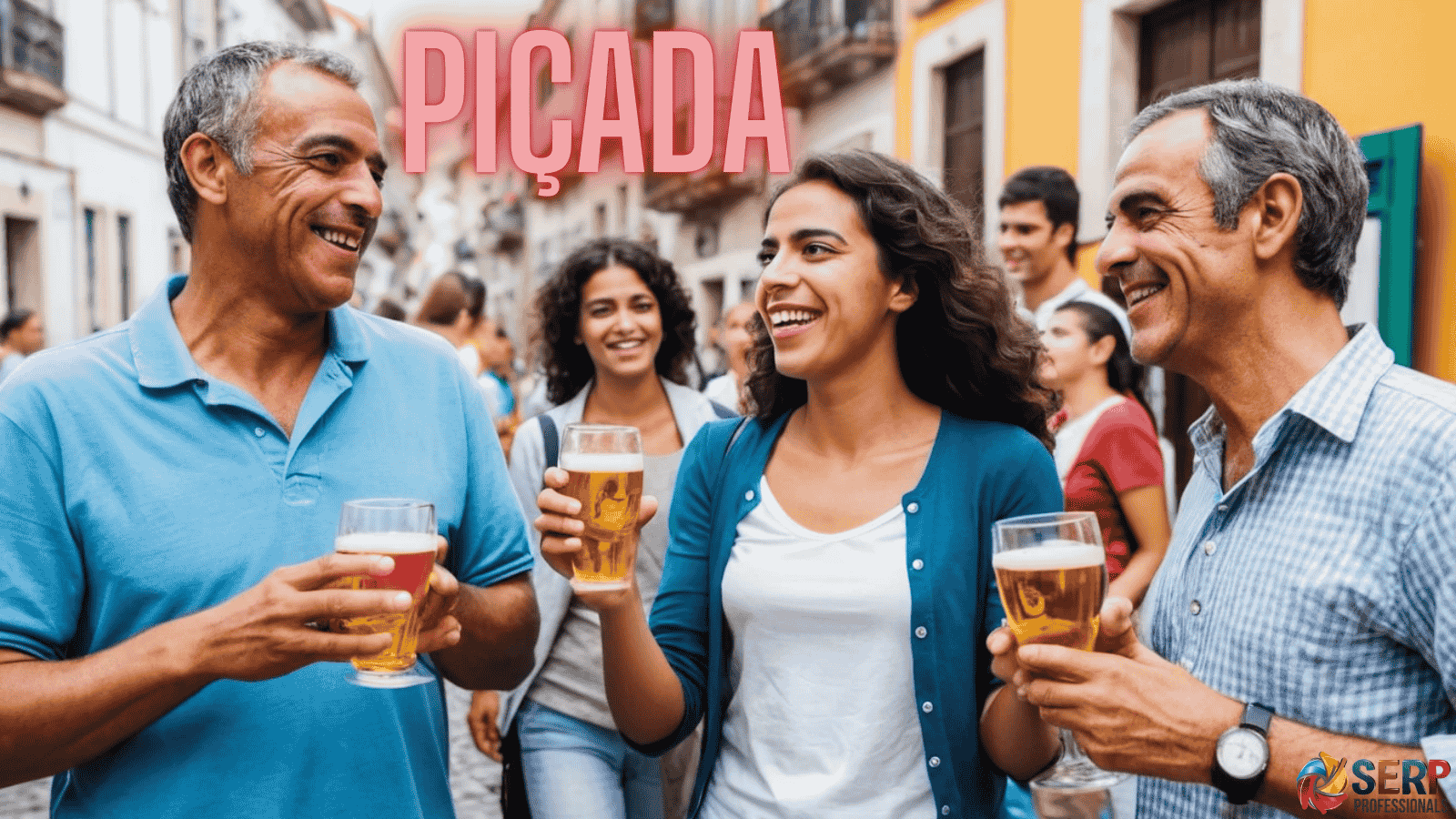
Imagine a bunch of companions kidding with each other amid a casual gathering. Somebody might make a witty comment or perky poke at another individual, and the bunch may allude.
In this setting, the term highlights humour or maybe more than criticism.
Similarly, if somebody overstates a story for comedic impact, audience members might snicker and portray the minute as a emphasising its engaging nature.
The key figure is the social setting and tone of the conversation.
Humour and Social Interaction
Humour is a fundamental component of communication in numerous societies, including speaking societies. Expressions like Piçada illustrate how dialect can capture the lively side of social interaction.
Friendly prodding is frequently a sign of closeness among companions. When individuals feel comfortable enough to joke with each other, it shows belief and familiarity.
In this sense, can be seen as an etymological device that reflects social bonds and social humour.
However, like numerous shapes of prodding, it is critical to utilise such expressions carefully. What is amusing in one setting might be misconstrued in another.
Digital Communication
In the computerised age, slang terms spread rapidly through social media, informing apps, and online communities. Words like Piçada are regularly utilised in online discussions, memes, and funny posts.
Digital communication has quickened the advancement of slang. Modern implications can develop quickly as clients reinterpret words in inventive ways.
For example, a clever video or viral post might be portrayed as to highlight its funny or overstated nature.
This flexibility appears in how dialect proceeds to advance nearby technology.
Why Understanding Piçada Matters
For individuals examining Portuguese or investigating Lusophone societies, learning slang expressions like Piçada offers a few benefits.
Cultural Awareness
Understanding casual dialect gives insight into socihumoururr, values, and social behaviour.
Better Communication
Recognising slang makes a difference; audience members decipher discussions more precisely, particularly in casual settings.
Deeper Language Learning
Mastering both formal and casual lexicon makes dialect learning more total and practical.
By understanding learners pick up a more profound appreciation for the lavishness and adaptability of communication.
Common Misinterpretations
Because Piçada is a casual term with different implications, it can in some cases be misconstrued by those new to Portuguese slang.
Some learners may accept it as having a strict meaning or endeavour to interpret it straightforwardly into another language. In any case, slang expressions regularly depend on social setting rather than strict definitions.
The best way to get to know is to watch how local speakers utilise it in genuine conversations.
The Evolution of Language
Expressions like Piçada highlight how dialect always advances. Words that start as casual jokes or territorial slang can, in the long run, end up broadly recognised.
Global communication, travel, and advanced media are proceeding to create and spread languages and dialects.
Portuguese, spoken by more than 250 million individuals around the world, is especially energetic due to its assorted social influences.
As unused eras make their own expressions, terms ended up a part of the living history of language.
Conclusion
The Portuguese expression Piçada is an interesting illustration of how slang captures the humour, imagination, and social lavishness of regular communication. Whereas its meaning can shift depending on setting and locale, the term, for the most part, reflects lively prodding, overstated circumstances, or funny remarks.
Understanding offers important knowledge into speaking societies and highlights the significance of casual dialect in social interaction.
For dialect learners, travellers, and social devotees, investigating expressions like opens the door to more profound social associations and more authentic communication experiences.
As proceeds to advance over nations such as Portugal and Brazil, expressions will stayann angetic portion of the language—reminding us that words are not fair instruments for communication, but reflections of culture, humour, and human association.