
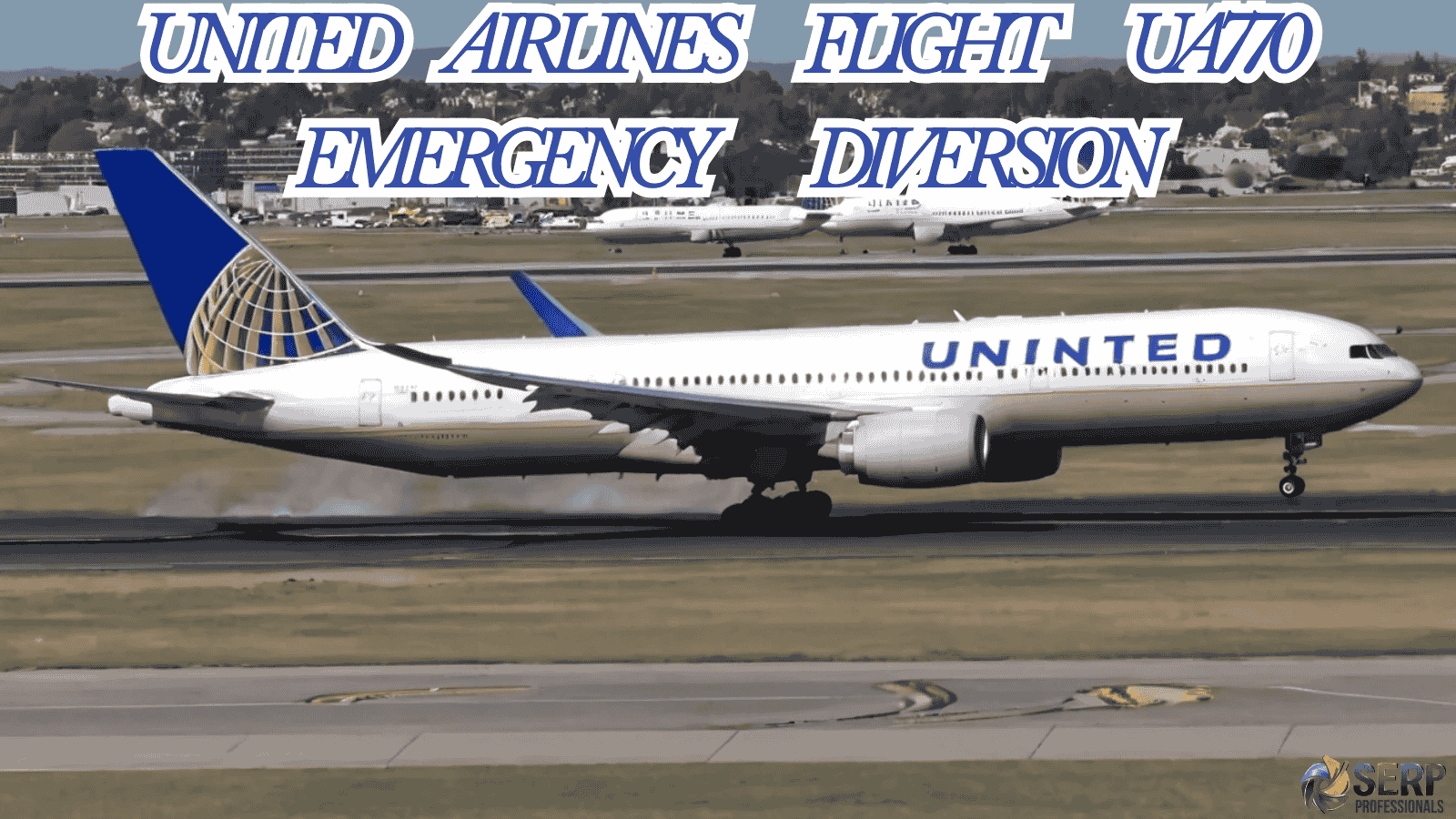
Learn the timeline and key facts behind the United Airlines Flight UA770 Emergency Diversion, including possible causes, aviation safety procedures, and how airlines handle mid-air incidents.
Air travel is planned to prioritise security over all else. Each Airplane in the sky works beneath strict operational strategies, and pilots are prepared to react rapidly to any startling circumstance. One occurrence that drew consideration from flying spectators and travellers alike included the United Airlines Flight UA770 Emergency Diversion. While flight diversions can seem disturbing at first, they are frequently prudent measures taken to guarantee the security of travellers and crew.
This article gives a nitty-gritty clarification of the United Airlines Flight UA770 Emergency Diversion, including the timeline of occasions, possible causes, flying security strategies, and how carriers oversee such incidents.
Overview of the Flight
United Airlines operates thousands of flights day by day over domestic and international routes. These flights interface major cities and transport millions of travellers each year.
United Airlines Flight UA770 was working as a planned traveller flight when a startling issue happened mid-flight. As a result, the flight group made the choice to start a crisis response to guarantee traveller safety.
The United Airlines Flight UA770 Emergency Diversion demonstrates how flying experts prioritise caution at any point potential dangers arise.
What Is an Emergency Flight Diversion?
A flight preoccupation happens when an Airplane lands at an airplane terminal distinctive from its originally planned destination. Preoccupations are a part of standard flying strategies and can happen for a few reasons.
Common causes of diversions include:
- Mechanical warnings or technical issues
- Passenger medical emergencies
- Severe weather conditions
- Security concerns
- Air traffic control instructions
When the United Airlines Flight UA770 Emergency Diversion occurred, the choice was likely based on one of these security considerations.
Importantly, redirections are not essentially emergencies—they are frequently prudent activities taken to maintain a strategic distance from potential risks.
Timeline of the United Airlines Flight UA770 Emergency Diversion
Understanding the grouping of occasions makes a difference in clarifying how aircraft groups handle startling circumstances during a flight.
1. Routine Departure
The flight started as a scheduled travel with travellers boarding the flying machine ordinarily. The flying machine was withdrawn, agreeing to the plan, and the early organisation of the trip continued without major issues.
Airplanes experience broad reviews some time recafter after ently each flight, which implies unforeseen issues are uncommon but still possible.
2. Detection of a Potential Issue
During the flight, the cockpit team took note of a circumstance that required advance assessment. Flying machine frameworks ceaselessly screen basic components such as motors, cabin weight, fuel systems, and avionics.
If the onboard frameworks identify unusual readings, pilots take after point-by-point strategies to analyse the situation.
In the case of the United Airlines Flight UA770 Emergency Diversion, the pilots likely received a framework alarm or operational flag that proposed a preparatory landing was the most secure course of action.
3. Coordination with Air Traffic Control
After evaluating the circumstances, the pilots discussed activity control to talk about the diversion.
In the United States, the discussion of activity coordination is overseen by the Government Flying Organisation. Controllers help pilots in selecting the most secure and most reasonable airport for landing.
Key variables considered amid a redirection include:
- Distance to the nearest airport
- Runway length and availability
- Emergency services on standby
- Aircraft type and fuel status
This coordination guarantees that Airplanes encountering issues can arrive safely and efficiently.
4. Announcement to Passengers
Once the choice to occupy is made, the flight group educates travellers about the alteration in plans. The captain ordinarily makes a declaration clarifying that the flying machine will arrive at asubstitute air terminal as a precaution.
Cabin crew members then prepare the cabin for landing by:
- Ensuring passengers remain seated
- Checking seatbelts and tray tables
- Securing loose objects
During the United Airlines Flight UA770 Emergency Diversion, these strategies made a difference in keeping calm and maintaining security inside the Airplane cabin.
5. Safe Landing at the Alternate Airport
The airship inevitably landed securely at the assigned air terminal chosen for the preoccupation. Crisis reaction groups are frequently situated close to the runway amid such circumstances, even if the chance level is low.
After the Airplane stops at the door, support groups assess the plane to recognise the issue that activated the diversion.
Passengers are at that point helped by aircraft staff, who organize elective flights or travel accommodations if needed.
Possible Reasons Behind the United Airlines Flight UA770 Emergency Diversion
While the correct reason for a preoccupation is not continuously promptly unveiled, a few common components might clarify the United Airlines Flight UA770 Emergency Diversion.
Mechanical Warning
Aircraft frameworks are greatly delicate and can identify minor inconsistencies in motors, hydrodynamics, or electronic frameworks. Indeed, a little caution may provoke a redirection for inspection.
Cabin Pressure Concerns
Cabin pressurisation frameworks keep up a comfortable environment for travellers amid high-altitude flights. If the framework recognises abnormal readings, pilots may be required to plummet and arrive as a security measure.
Passenger Medical Emergency
A therapeutic crisis, including a therapist or team part can also lead to a preoccupation. In such cases, the closest appropriate Airplanee terminal is chosen to guarantee quick restorative assistance.
Weather Conditions
Sudden storms, turbulence, or extreme climate conditions may, moreover, require pilots to modify their course or arrive at an alternative airport.
How Airlines Handle Diversions
The United Airlines Flight UA770 Emergency Diversion highlights the complex coordination involved in modern aviation operations.
Several teams work together during a diversion:
- Pilots monitoring aircraft systems
- Air traffic controllers are guiding the aircraft.
- Cabin crew assisting a passenger.
- Ground operations preparing the airport
- Maintenance engineers inspecting the aircraft
This facilitated exertion guarantees the security and comfort of travelers all through the process.
Passenger Experience During a Diversion
For travellers, a flight preoccupation can be astounding or unpleasant. Be that as it may, aircraft groups are prepared to oversee these circumstances calmly and professionally.
Typical traveller encounters amid the United Airlines Flight UA770 Emergency Diversion likely included:
- A clear announcement from the captain
- Cabin crew instructions for landing preparation
- A smooth landing at the alternate airport
- Support from airline staff after arrival
Airlines more often than not give help with rebooking flights, organising lodging housing if necessary, and guaranteeing travellers proceed with their travel as easily as possible.
Aviation Safety and Preventive Measures
The flying industry is built on strict security controls. Organisations like the Government Flying Organisation (FAA) require aircraft to follow point-by-point security strategies that minimise risks.
Key safety practices include:
- Regular aircraft maintenance checks
- Continuous monitoring of onboard systems
- Extensive pilot training programs
- Strict operational guidelines for emergency decision-making
The United Airlines Flight UA770 Emergency Diversion demonstrates how these security frameworks work effectively when unforeseen circumstances arise.
Why Diversions Are a Sign of Safety
While preoccupations may appear sensational in news features, they really speak to mindful decision-making by flight crews.
Pilots are prepared to err on the side of caution. If any unusual condition occurs—even one that may afterwards demonstrate harmless—landing at the closest appropriate airport is frequently the safest option.
The successful outcome of the United Airlines Flight UA770 Emergency Diversion shows that aviation safety protocols work exactly as intended.
Conclusion
The United Airlines Flight UA770 Emergency Diversion serves as an illustration of how present-day flying frameworks ensure travellers and crew amid unforeseen circumstances. From identifying a potential issue mid-flight to planning with detailed activity control and landing securely at a substitute air terminal, each step follows strict security procedures.
Air travel remains one of the most secure forms oof transportationnin the world, accuraprimarily becauses and aircraft take such prudent actions when necessary.
For travellers, occasions like this can be badly arranged, but they eventually illustrate the flying industry’s commitment to security, polished skill, and dependable decision-making.